24/7 incident line
1800 370 270
Call if you are under active attack.

Breach remediation
If you have been breached or suspect it, we start by establishing what happened and containing any access that is still open.
24/7 incident line
Call if you are under active attack.
The responders
Our testers hold postgraduate cyber qualifications, ISC2 certification and ACS and AISA membership.
Insurance
Professional indemnity, public liability, cyber and workers' compensation insurance, all current.
Overview
Breach remediation follows a security incident, confirmed or suspected. We investigate the affected systems, determine the likely entry point and scope, and work with your team to contain it. Then we fix the weakness behind it and re-test what was affected.
Data breach remediation covers each system the attacker reached, wherever it is hosted. Where the incident carries breach notification obligations, we prepare the technical facts your management and legal advisers need. We do not provide legal advice. The same engineers deliver vulnerability remediation, closing the findings our penetration testing or attack surface monitoring reports.
We contain the incident, fix the weakness behind it and verify the fix, and report to you in writing at each stage.
What the engagement covers
Engagement
Fixed scope. We investigate and contain first, then fix the cause and re-test. Triage sets the scope and the timeframe in writing, and the engagement closes on a written incident report.
Fixed-scope engagementOne test or review, with the target, timeframe and deliverable set up front.
Scope
Incident containment and triage
We establish what happened and what was reached, and contain any access that continues.
What you get

In service
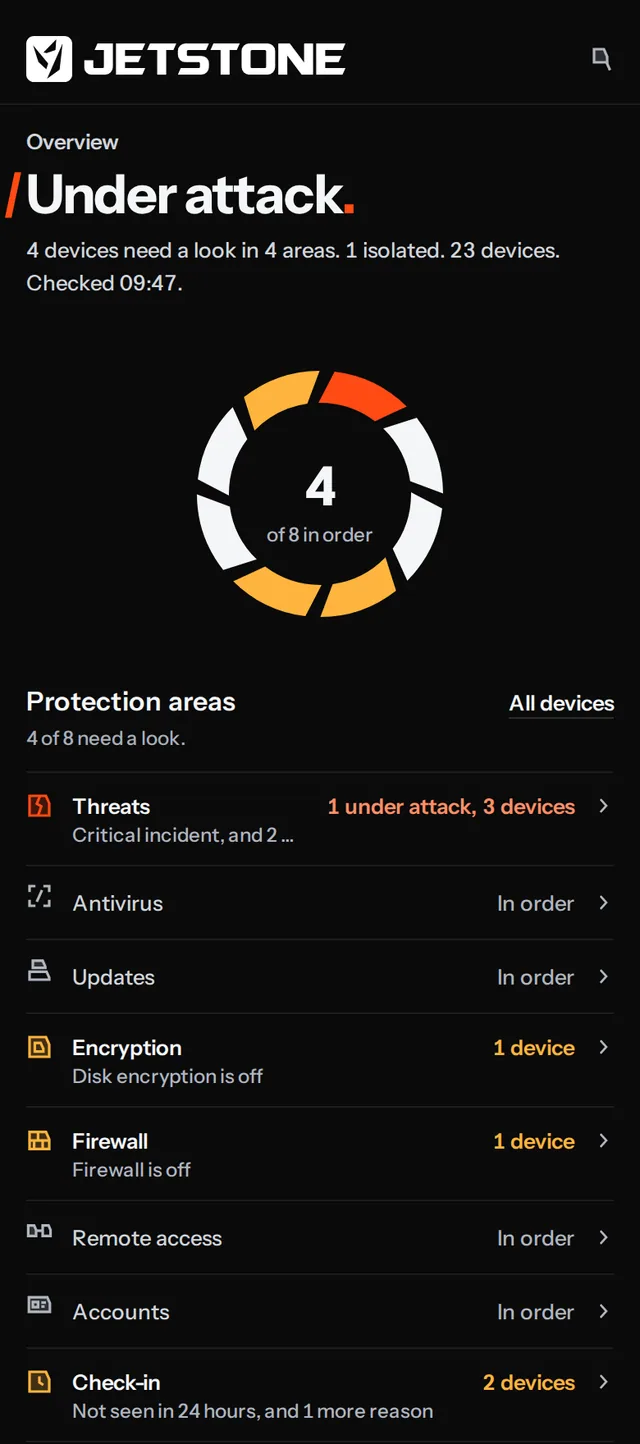
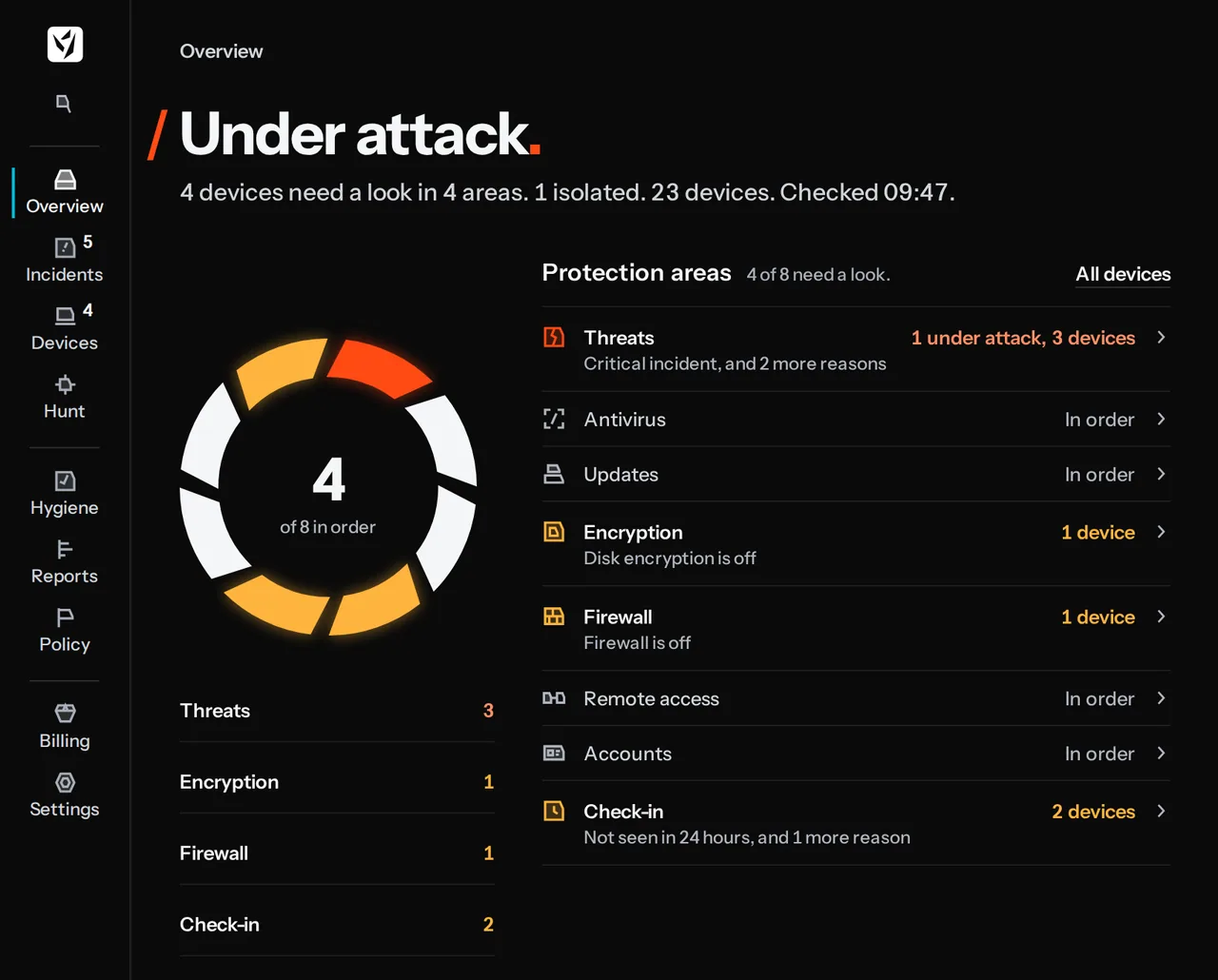
It will end the process, quarantine the file, isolate the device or sign the user out.
It will flag signs of a stolen account, such as impossible travel or a malicious inbox rule.
Every automatic action will be undoable in one tap.
Five, in order. Triage establishes the entry point, scope and data touched. Containment follows, with each action agreed with you before it is taken. Then we find the root cause, engineer and deploy the fix with adjacent gaps hardened, and re-test the affected surface. You finish with a factual incident report for your board, insurer or legal advisers.
It depends on what triage finds, so we set the timeframe in writing once the incident is understood.
The work that follows a security incident. We establish the entry point and what data was touched, cut off any continuing access, find the root cause and engineer the fix to the weakness behind it. Then we re-test the affected surface.
Incident response is the first phase: triage, containment and cutting the attacker's access. Breach remediation is the engineering that follows: the root cause fixed, adjacent gaps hardened and the affected surface re-tested. We run both in the same engagement, so the fix follows triage with no handover to another vendor. Incident response starts with a call to the incident line.
The systems and records the attacker reached. We establish which personal information was accessed and who is affected, close the access, fix the weakness behind it and re-test.
Yes. Where our penetration testing or attack surface monitoring reports a vulnerability, our engineers make the code, configuration or infrastructure change, ship it and re-test it. We design, build and operate production software as well as testing it. Penetration testing includes a re-test of agreed fixes on fixed-scope work.
The systems the attacker reached and the gaps beside them: application code, server and cloud configuration, identities and mailboxes, and the backups recovery depends on. We work on your systems wherever they are hosted, and your IT provider works beside us through containment and the fix. We also deliver the Microsoft 365 and Azure security review.
Engineers who build and run production software in regulated industries, and who also run our offensive testing practice. The person who traces your incident to its root cause builds and attacks systems like yours, so they can build the fix as well.
Call the 24/7 incident line on 1800 370 270. Engagement covers containment, root-cause analysis, remediation engineering and a re-test.
Yes. A suspicion is enough to call. Triage comes first either way: what happened, what was reached and whether the compromise is still live. If triage shows no incident, you get that finding in writing, along with any weaknesses the investigation turned up.
With least-privilege access, and no containment action is taken until you have agreed to it. Engagement material is encrypted in transit and at rest, and client data is hosted in Australian regions.
A penetration test looks for the ways in before there is an incident. Breach remediation follows one, confirmed or suspected: containment, root cause and the engineering fix. Both end with a re-test of the fixed surface.
Yes. For ransomware we isolate the affected machines without wiping them, cut the access the attacker still holds and establish which backups are clean before anything is restored. For an account takeover we revoke sessions and tokens, remove the rules and app consents the attacker added, and trace what the mailbox sent and read. Both are cyber attack recovery work.
It depends on what the evidence supports. We make that decision with you and put it in writing. Recovery restores from backups proven clean, rebuilds what cannot be trusted and closes the way in before systems rejoin the network. The record covers what was rotated, in what order, and the criteria met at each reconnection gate.
The timeline in UTC from first access to containment, the root cause and adjacent gaps, the systems and records reached, each fix with the date it went live, and the re-test result. It is written for your board, insurer or legal advisers, and it is what they read first in the closure pack.
Yes, early. Many policies require notice before an external responder is engaged, and some name a panel or need the insurer's consent in writing. We brief the insurer and its breach coach from the incident report. Where privilege over the findings matters, the engagement runs through your lawyers.
Take the first-hour steps: isolate affected machines without wiping them, preserve logs and records, contain accounts from a known-clean device, engage your insurer and note your notification clock. Then call the 24/7 incident line on 1800 370 270.
Australian organisations with a confirmed or suspected incident: ransomware, a mailbox takeover, a compromised application or cloud tenancy, or a supplier breach that reached their systems. It also suits a board, insurer or customer that needs written proof the cause is fixed and re-tested.
Yes. We work on your systems wherever they are hosted, and run scoping, containment and the debrief by phone, video and secure access.
Yes. You agree the terms before an incident: a named response lead, a response-time target set at a level we meet today, an annual readiness review and hourly rates agreed in advance. The incident response retainer sits beside the incident line.
By scope. Triage and containment come first, then we scope the remediation against what triage found. The size of the affected surface, the state of the systems and any Breach notification support set the figure. We do not publish prices. You get a figure once triage shows the scope.
Go deeper
Know what an attacker could reach, with every finding re-tested after the fix.
A named security lead for your board, and a review of your Microsoft 365 and Azure tenant.
Essential Eight, SMB1001 or ISO 27001, carried through to the evidence your auditor reads.
From the newsroom
Updated Guides
Updated Guides