

Legal
GRM LAW
The firm runs intake, conflicts, trust oversight and AML/CTF from one portal.
We also run the firm’s Microsoft 365 tenant.

Defensive and advisory
Know everything you expose to the internet, and get a short written list each month of what changed and what to fix first.
Overview
Attack surface management is a managed service for Australian organisations: we keep an inventory of everything you expose to the internet, scan it on a schedule and send a written position each month on what changed and what to fix first.
Your attack surface changes between penetration tests. Someone stands up a subdomain for a campaign or opens a database port for a one-off job, and a report from months earlier does not show it.
Attack surface management keeps your inventory current, watches it with scheduled scans and turns the change since last period into a short list of things to fix.
We built and operate the scanner ourselves, and you get the same service anywhere in Australia.
We keep the list current and scan it on a schedule.
Inventory: every registered domain, subdomain, host, public IP address and certificate the business owns, with a named owner for each. Discovery: scheduled external scans that catalogue every exposed host and service and flag remote-access and database ports when they surface.
Verification: each finding checked against known CVEs, misconfigurations and TLS problems, and against default logins in deep scans you consent to. Prioritisation: findings ranked against CISA's Known Exploited Vulnerabilities catalogue and EPSS exploit probabilities. Change: each scan diffed against the last one so the report is a change list. Remediation: the fix scoped and, where you want it, carried by Black Shard engineers. Evidence: a dated position an insurer or a customer's security questionnaire can rely on.
Each scheduled scan catalogues every host and service your footprint exposes to the internet. A remote-access or database port that surfaces is flagged in that period's change list, with the owner of the asset named.
External vulnerability scanning then checks each exposed service against known CVEs, misconfigurations and TLS problems, and ranks what it finds on CISA KEV and EPSS. The result reaches you inside the written monthly position.
We also check your email authentication over DNS: SPF and DMARC, including softfail and p=none policies that leave a domain open to spoofing. Where a gap matters, we describe the route an attacker could take to reach it in MITRE ATT&CK terms.
Most exposure sits on assets nobody is watching: the staging copy of the site left reachable, the old marketing microsite still resolving, the SaaS trial that was given a subdomain and forgotten, the mail relay that predates the current provider.
A scan of the assets you know about misses them, so the first thing you get is the inventory itself. We build it from registrar and DNS records, certificate logs and the scans, and look hardest at the hostnames that appear in one source and are missing from the others.
Each asset gets a named owner who can approve a change to it, so every finding has someone to close it. Our guide to building an inventory of internet-facing assets explains how we build one.
The first period builds the baseline every later scan is compared with. Onboarding ends when you have your first written position.
A raw scanner report ranks by CVSS, which measures how bad a flaw could be. Exploitation data shows whether anyone is using it.
Our scanning ranks against two exploitation signals instead: CISA's Known Exploited Vulnerabilities catalogue, which lists flaws confirmed exploited in the wild, and EPSS, which scores the probability a flaw is exploited in the next thirty days. A high-CVSS finding with no exploit activity sits below a moderate one that attackers are using this month.
Every finding carries one of four verdicts: OK, at risk, not assessed because a scan could not complete, or not observable from outside. Only the first is treated as a pass. A system the scan cannot see is reported as a gap in coverage, never assumed to be fine.
Every scan ranks your open findings against the KEV catalogue and EPSS scores as they stand that day. Software that moved onto the KEV list since the last scan is in that period's change list, ranked ahead of findings with no exploit activity, with its owner named.
Our known exploited vulnerabilities report for July to September 2026 reads the catalogue for the office boundary, and VPN appliances, firewalls and file-transfer appliances are the internet-facing systems most likely to need the 48-hour patch clock.

Vulnerability scanning is one input to attack surface management: the scan lists what it can detect on the assets it was pointed at.
Attack surface management adds the inventory in front of the scan, so the scan is pointed at everything, and the review behind it, so the output is a ranked change list with owners instead of a report the size of the footprint.
A penetration test shows what an attacker can do with your systems in a bounded engagement. Attack surface management is the standing watch between tests that catches drift and known exploitable weaknesses as they appear. We run both.
Scheduled external vulnerability scanning is part of every attack surface management engagement. The findings reach you read by an engineer and ranked, each with its owner.
The scans keep watch on the same footprint between each penetration test and web application penetration test. A penetration test and a vulnerability scan answer different questions, and many businesses run both. We recommend a penetration test at least once a year, and again after any significant change.
A point-in-time report describes the attack surface on the day it ran.
Monitoring compares every scan with the last one, so what lands in your inbox is the change since the previous period and what it means: the host that appeared, the port that opened, the certificate that expired, the software version that moved onto the KEV list since last month.
| Compared on | A vulnerability scan on its own | Attack surface management | A penetration test |
|---|---|---|---|
| Starts from | The assets the scan was pointed at | An inventory of every internet-facing asset, each with a named owner | A scope agreed for a bounded engagement |
| Ranks by | CVSS severity | CISA KEV and EPSS exploitation data | What an attacker can do with your systems |
| Tracks change | One report for the day it ran | Every scan compared with the last | A re-test of your fixes, included in the engagement |
| You receive | A list of what the scan detected | A written monthly position: what changed, what matters, what to fix first | A report with every finding proved by hand by a tester |
Starts from
Ranks by
Tracks change
You receive
Each month you get a short written position: what changed in your footprint, which findings matter and what to fix first, with the owner and the change named.
It also lists what was fixed since last time and verified closed on the following scan, which assets could not be assessed or observed, and any decision you need to make, such as retiring an asset instead of patching it.
The position is written for the person who owns the risk, and the same document answers an insurer at renewal or a customer's security questionnaire without a rewrite.
ASD's Essential Eight asks at Maturity Level One for automated asset discovery at least fortnightly, and for a vulnerability scanner used at least daily on online services and on the operating systems of internet-facing servers and network devices. Both requirements sit in the patch applications and patch operating systems strategies.
At the same level a patch for an internet-facing system is due within 48 hours when the vendor rates the flaw critical or a working exploit exists. KEV and EPSS ranking puts flaws with known exploitation first in the position, and the scan cadence is agreed at scoping.
APRA's CPS 234 requires regulated entities to test their information security controls through a systematic testing program. ISO/IEC 27001:2022 Annex A includes control 5.9, an inventory of information and other associated assets, and control 8.8, management of technical vulnerabilities.
The inventory lists every internet-facing asset with its named owner, and each dated monthly position shows what the scans found and which fixes were verified closed.
ASD Essentials, launched on 15 October 2026, places boundary services in priority phase one. Where the standard is the project, we run Essential Eight assessments and ISO 27001 readiness, and the same position answers the controls a cyber insurer asks about.
In a managed engagement our engineers read each period's results against what you run, pick out the changes that need action and write the position, so you are not sent an unfiltered scanner report.
Black Shard holds SMB1001:2026 Gold, issued by CyberCert. Its own estate is at Essential Eight Maturity Level 3, assessed September 2026.
The scanner marks a finding OK only once the scan has verified it, and a system it cannot see is never treated as a pass. The engineers who read your scans also run our penetration tests, Azure and Entra ID reviews and remediation work, so the same firm can scope the fix.
A finding that needs proving goes to a penetration test. Exposure that traces back to the tenant goes to a Microsoft 365 and Azure security review or an Entra ID security review.
If an exposed system turns out to be compromised, incident response comes from the same firm. A vCISO keeps your risk register current and oversees your tests and reviews.
It runs the same way wherever you are based. Scoping, the periodic review and any follow-up conversation happen by email and video call.
We scan only assets you own or are authorised to have tested, confirmed in writing at scoping.
In Brisbane you can have the review in person if you prefer, beside our other cyber security Brisbane work.

The cost follows what is in scope: the number of domains and hosts in your footprint, how many environments you run, and whether we stop at reporting or go on to remediation.
Book a free 30-minute scoping call to settle the footprint and the cadence, or send a rough shape of what you want watched to info@blackshard.com.au.
The scans run from outside, with no credentials and no agents on your systems, so the engagement starts from a short list.
Legal
The firm runs intake, conflicts, trust oversight and AML/CTF from one portal.
We also run the firm’s Microsoft 365 tenant.

Health
The clinical site and the practice’s ICT now sit with one team.
Hosting, ICT management and security now run under one ongoing engagement.

Property
Every valuation, from inspection to invoice, runs through The Den.
Reports, sketch PDFs and fees come from the same job record in The Den.
Product screens shown with sample data.
In service
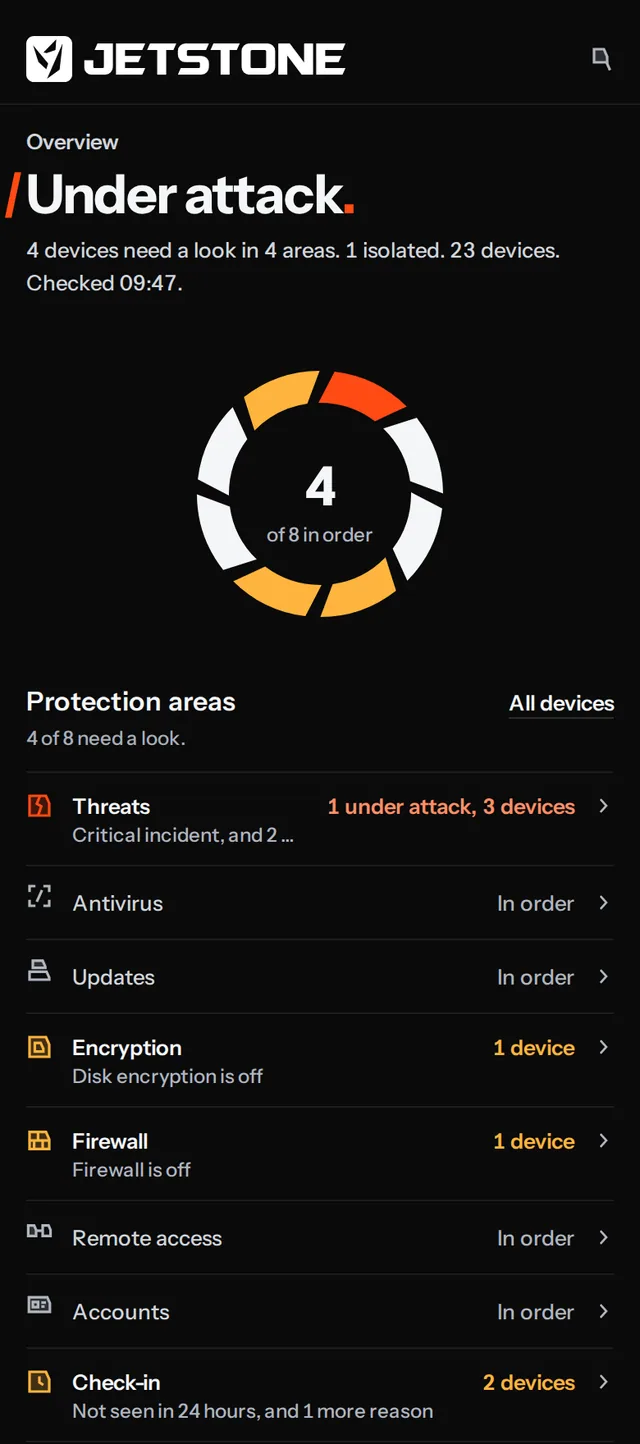
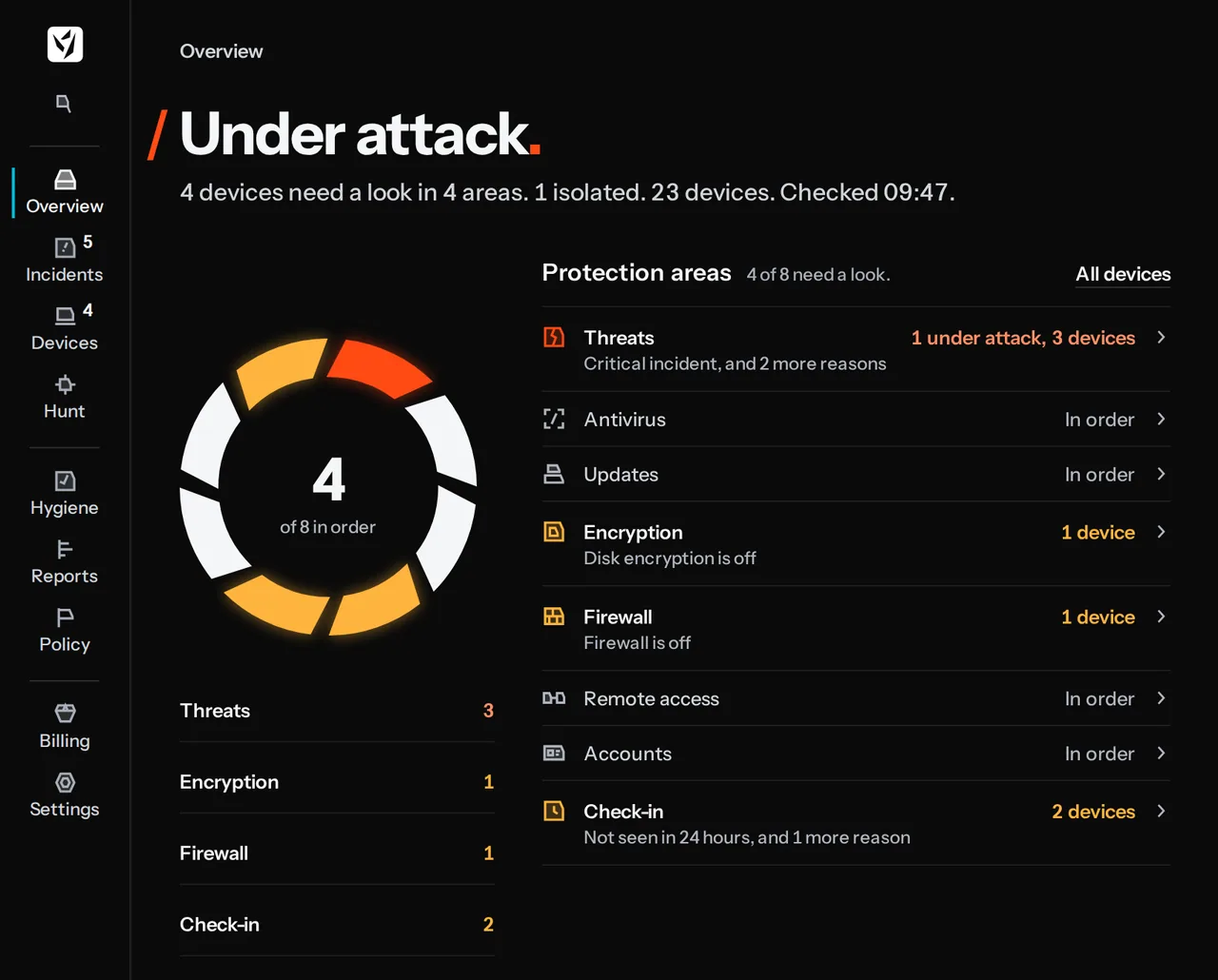
It will end the process, quarantine the file, isolate the device or sign the user out.
It will flag signs of a stolen account, such as impossible travel or a malicious inbox rule.
Every automatic action will be undoable in one tap.
From the newsroom
 Critical severity
 High severity
 Medium severity
An inventory of every internet-facing asset with a named owner, scheduled scans of that footprint, findings ranked on CISA KEV and EPSS exploitation data, change tracking between scans and a written monthly position on what to fix first. We can also make the fixes where the engagement extends to remediation.
Attack surface management means knowing every asset you expose to the internet, scanning those assets on a schedule, ranking what the scans find on real exploitation data and closing the findings that matter. You get a written position each period on what changed.
A penetration test establishes what an attacker can do with your systems in a defined, bounded engagement. Attack surface management is the standing watch between tests: scheduled scans that catch drift and known exploitable weaknesses as they appear. Many businesses run both.
Vulnerability management works the list of flaws on the assets you already know about. Attack surface management starts one step earlier, with the inventory, so the assets nobody was tracking enter the list, and it ranks on exploitation data instead of severity alone.
Monitoring is the scheduled watch: each scan of your external footprint is compared with the last, so a new host, an opened port or an expired certificate shows up. Management is the cycle around it: an inventory with a named owner for each asset, findings ranked on exploitation data and each fix verified closed. We run both as one service.
On a schedule agreed at scoping, with change tracking that compares every scan against the one before it. The cadence depends on how much of the footprint changes and how quickly you need to know.
The registered domains and any known hosts, a named contact for each part of the business that owns internet-facing systems, and written authorisation to scan. No credentials and no agents on your systems: the scans run from outside, the way an attacker sees you.
Yes. A finding that cannot wait is raised when we find it. You also get the written position each month.
Yes. Where a finding needs closing, our engineers can make the fix. Monitoring, penetration testing and vulnerability remediation engineering run from the same firm.
The scan could not see the system from outside, or could not complete against it. Neither is treated as a pass. The verdict records the gap in coverage instead of assuming the system is fine.
Yes. The service runs the same way anywhere in Australia, as do our other cyber security services. In Brisbane you can choose an in-person review.
Yes. The scans run from outside your network with no credentials and no agents, so they see your domains, hosts, services and certificates the way an attacker does. That outside view is what external attack surface management means, and we run it as a managed service across Australia.
Yes. Every engagement includes external vulnerability scans on a standing schedule. Each exposed service is checked for known CVEs, misconfigurations and TLS problems, the findings are ranked on CISA KEV and EPSS, and our engineers write what to fix first.
New hosts and subdomains, exposed services including remote-access and database ports, software with known CVEs, misconfigurations, TLS and certificate problems, and SPF and DMARC gaps in email authentication. Deep scans you consent to also test for default logins.
We run it as a managed service. We built and operate the scanner, our engineers read each period's results, and you receive a written position each month that names the owner for each fix.
Yes. Maturity Level One asks for automated asset discovery at least fortnightly and daily vulnerability scans of online services and internet-facing servers and network devices. The service supplies the inventory and the external scans for your internet-facing systems, with every position dated and the cadence agreed at scoping.
The cost follows what is in scope: the number of domains and hosts in your footprint, how many environments you run, and whether we stop at reporting or go on to remediation. Scoping is a free 30-minute call that settles the footprint and the cadence.