
Property
Fox Valuations
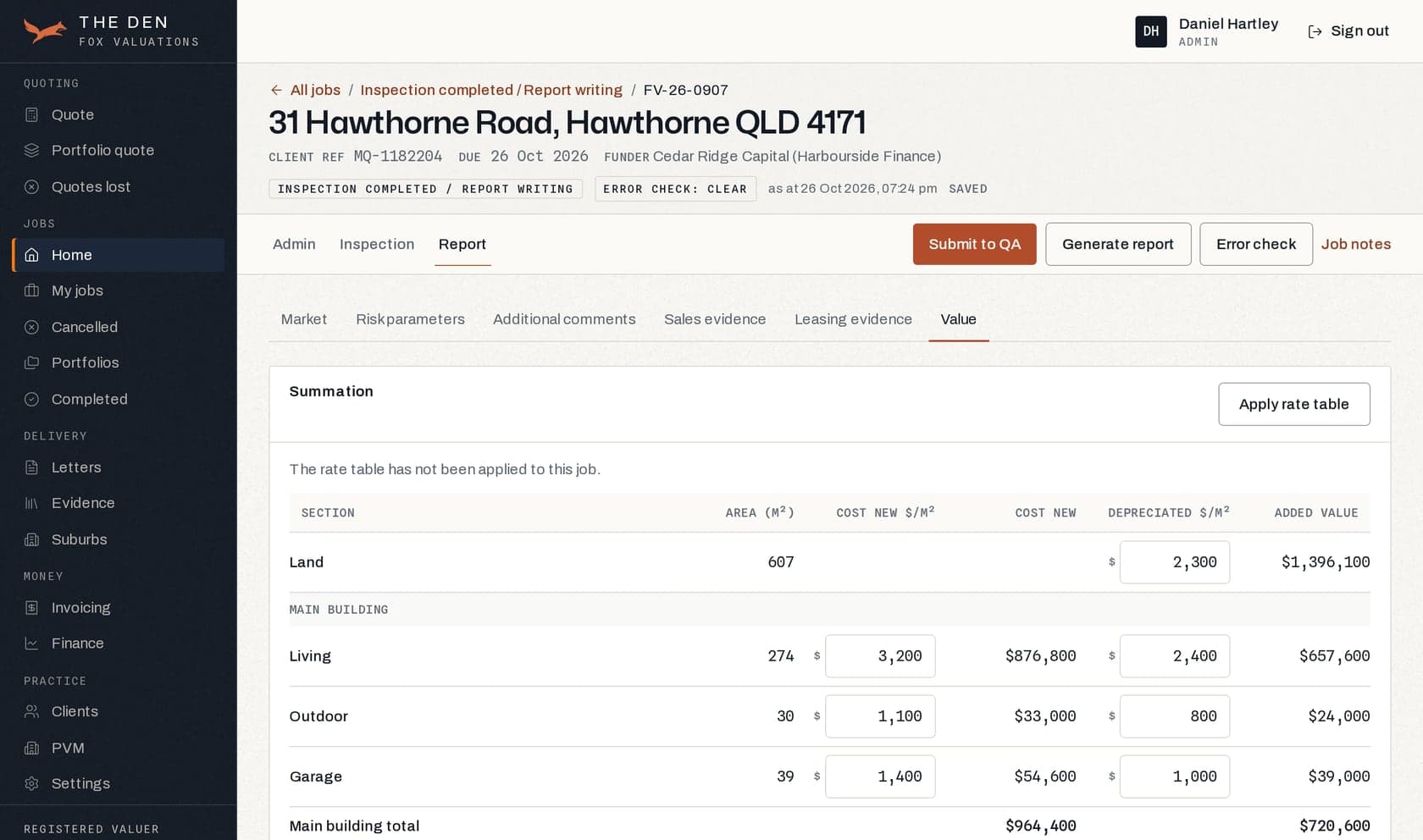
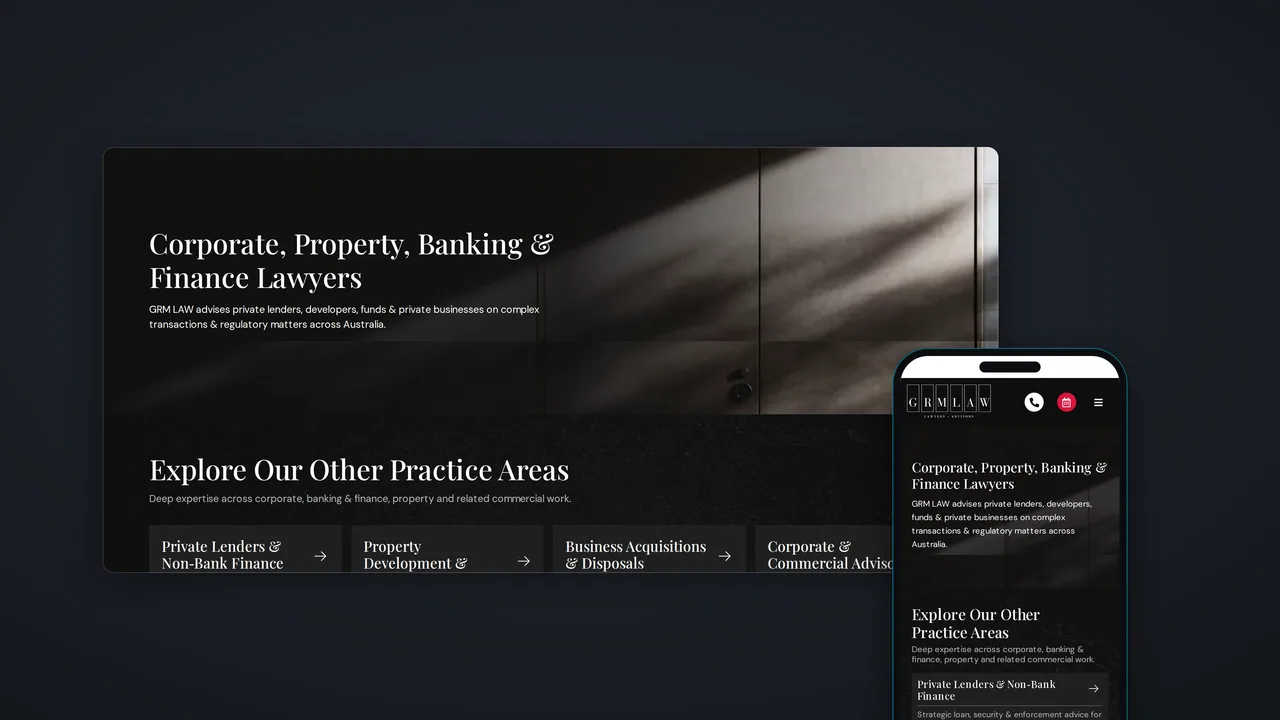
Every valuation, from inspection to invoice, runs through The Den.
Reports, sketch PDFs and fees come from the same job record in The Den.

Software engineering
We build web apps, mobile apps and internal systems with your regulator's rules designed in from the start.
At a glance
Overview
Our custom software development team has shipped clinical software, legal and compliance platforms and financial-services systems for organisations across Australia. Where the engagement calls for it, we keep running the system after launch.
Engage us for a defined build, or for ongoing engineering where the product keeps evolving after launch. We deliver Australia-wide.
The team that builds your system also hosts it, patches it and keeps it running. We have shipped more than 1,500 deploys and releases since 27 April 2026, and our repositories held more than 65,000 tests when counted on 26 October 2026.
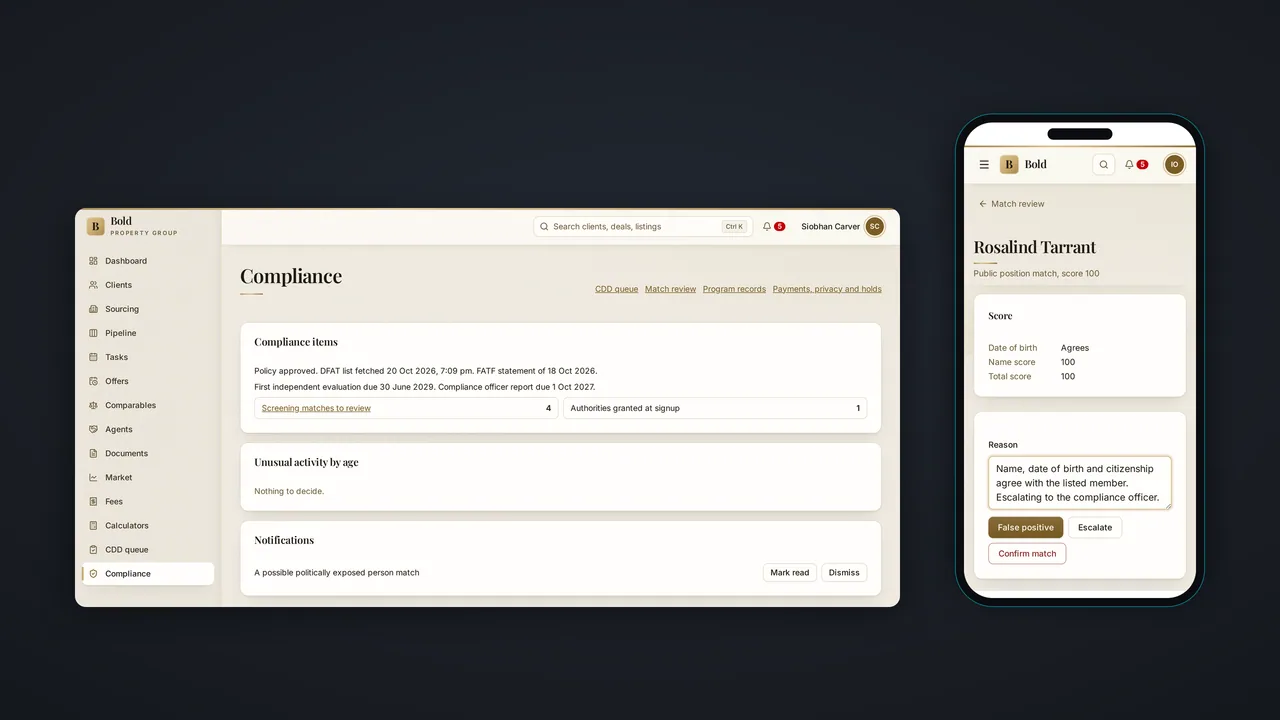
We can take you from brand and website through to the platform and the apps around it, and keep engineering after launch where the engagement calls for it. Bold Property Group's deal-sourcing engine and staff app are one example.
Aurii, the clinical app we built for private hospital specialists, is a second, live on the App Store, Google Play and the web, and among the many systems in production with us today.
We take over existing systems as well as starting new ones. For Fox Valuations we took over the practice's valuation workflow platform and rebuilt it on dedicated production infrastructure. It runs today as The Den, with 9,340 tests behind its 21 October 2026 release.
A takeover starts with a review of the codebase, the accounts and the backend the system depends on. Then we bring it under our release pipeline, with a rebuild where that costs less than repair.
We are a Xero Developer Partner, with integrations on the Xero Accounting API from quote-to-cash to bank-feed and transaction sync. The portal we run for an investment firm syncs its document register to SharePoint and signs staff in with Microsoft Entra ID.
Where the product needs a phone app, mobile app development runs in the same engagement, on the same API and the same data rules as the web app.
Your sector's rules shape the build. We build for law, health, capital markets, property, government and motorsport.
The law, health and investment systems we run in these sectors are a few of many in production with us, and each was built with its sector's obligations in the data model.
Each sector sets its own rules for records. We build yours into the system.
We work with law firms, health, financial services, property and government, and the team that builds your system is the team that secures it.
Agencies and councils can buy a build through arrangements they already use.
Black Shard is a prequalified supplier to Queensland councils under Local Buy arrangement LB308, ICT Solutions, Products, Services and New Technologies. It is a prequalified supplier under the NSW Government ICT Services Scheme (SCM0020), and an approved supplier on the Tasmanian Government Technology Services List (TSL) for Application Development Services, Operational Technical Services and Cyber Security.
The engineers who design your system threat-model it before they write code. They keep the architecture least-privilege, keep secrets out of code, and hold security review gates through delivery.
Our cybersecurity practice then tests the finished system against the OWASP and ASD methodologies. Every finding is verified by hand and comes back with reproduction steps and a fix.
Dependency scans, secrets scans and tests run before each release, and secrets are injected at deploy time.
Before a higher-risk release, a reviewer with no part in the build can run a secure code review or a web application penetration test. A secure code review checks how users are authenticated and authorised, how input is validated and where credentials live.
We hold SMB1001:2026 Gold, issued by CyberCert. Our own systems sit at Essential Eight Maturity Level 3 across all eight strategies, assessed September 2026.
Compliance software has to know who may see a record, who changed it, what it said before and how long it is kept.
Our compliance software development covers Australian law firms, financial services licensees and property businesses. One example is an AML/CTF program with sanctions, PEP and ID checks inside the app staff already work in.
We design those rules into the database and the application from the start, so the evidence an assessor or regulator asks for comes straight out of your system.
In a build, the Australian Privacy Principles become decisions about schema, logging, region and retention. Where the organisation around the system needs the same work, it runs as Privacy Act uplift.
Law firms, accountants and real estate agents providing designated services have had to comply with AML/CTF obligations since 1 July 2026. We build the screening, the approvals and the records into the system the firm operates from.
In Australia. The clinical app we run and the client platforms we host sit in Australian Azure regions, with secrets held outside the code and every release through a reviewed pipeline.
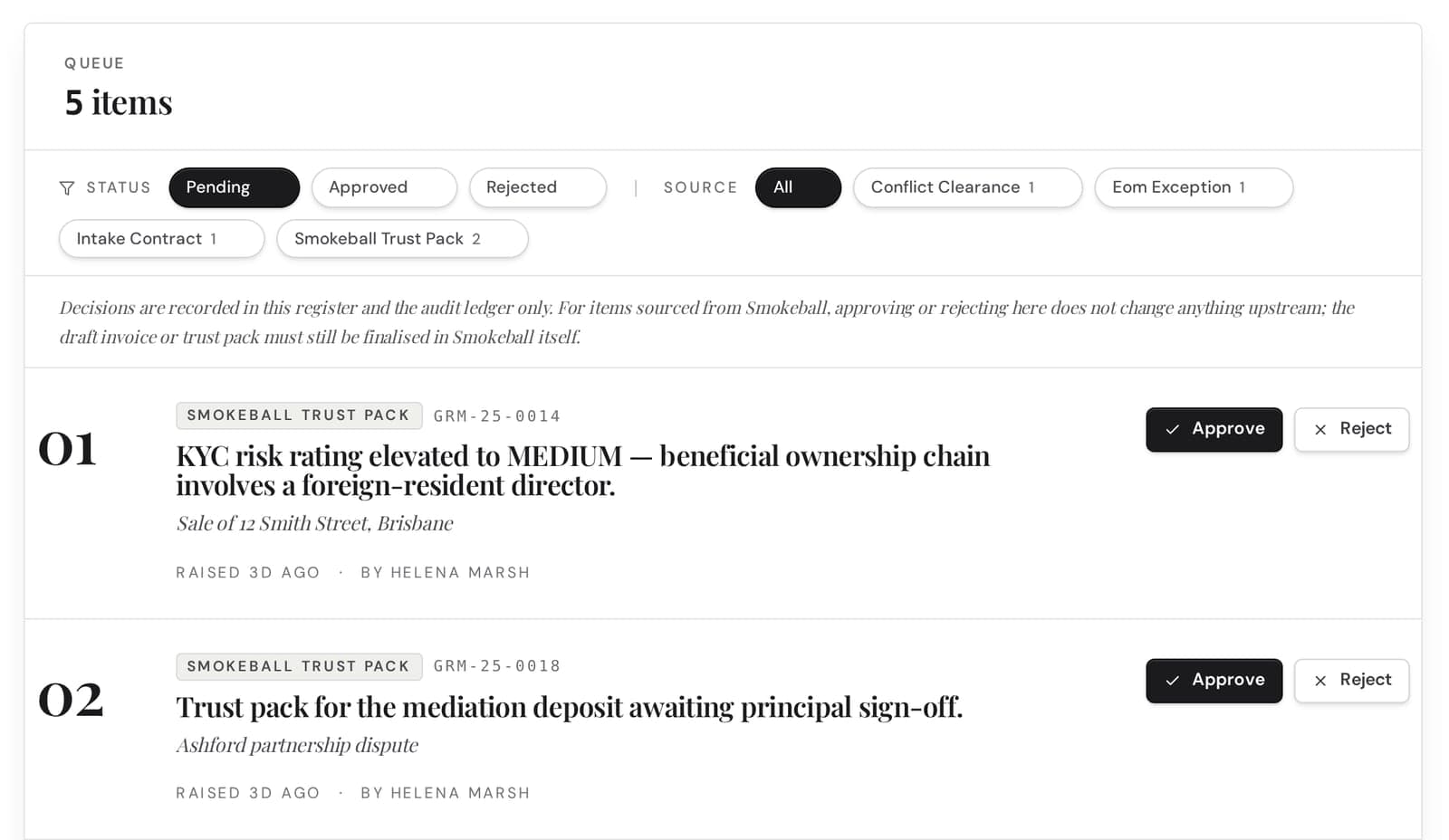
Regulated software has to answer two questions: whose data is this, and who did what to it. Each client's data is kept apart in the database itself, and every change is written to an audit trail the client can read back.
The separation sits in the database itself, where one practice or one firm cannot read another's records whatever the application above it is asked, and the data never leaves Australia.
Audit trails are built the same way, with an append-only audit ledger recording who changed what and what it said before, kept for as long as the client's obligations require. Aurii keeps a tamper-evident audit trail on every clinical record.
A query that leaves out its tenant still cannot read another organisation's records.
Azure's infrastructure is independently IRAP-assessed to PROTECTED and holds ISO 27001 and SOC 2 at the platform level. Those are the platform's assessments, separate from what Black Shard holds.
We build to the Australian Privacy Principles under the Privacy Act 1988, and Aurii's clinical and privacy frame was designed for Australian obligations from the start.
A custom platform starts with its data model. We design the database around who may see a record, who changed it, what it said before and how long it is kept, then build the application on top of it.
Account custody decides who can revoke access and who can produce the audit trail, which is why who owns the Azure tenant matters on a custom build.
Choose a defined build, with a brief, a delivery date and a set of deliverables agreed before work starts. Or choose an ongoing engineering engagement, where a standing team designs, ships and operates the product as it keeps evolving after launch.
You agree the scope, deliverables and price in writing before work starts, and the person who scopes your work stays on it.
If your brief also carries a compliance target or needs a standing security seat, those run as separate services alongside the build: readiness programs towards Essential Eight, SMB1001, ISO 27001 or Privacy Act uplift, and standing advisory or vCISO.
The client portals we run for law and investment firms are among the systems that take shipped changes under ongoing engagements. A defined build names the target, timeframe, and deliverable up front.
We quote a defined build against your brief and delivery date, in writing, before any work starts. An ongoing engagement runs as a standing team on an agreed cadence, reviewed as the work evolves.
Six things move the price and the delivery date.
A defined build ends with a shipped, operating product and its delivery pipeline in place. You also get what keeps it running after launch: the data model, monitoring, and the audit trail your obligations call for.
Send the brief to info@blackshard.com.au and you get a proposed scope back.
Buy for standard needs. Build where the process is your differentiator, generic tools force double-handling, or audit obligations reach the architecture. We apply the criteria in custom software vs off-the-shelf to our own builds.
Property
Every valuation, from inspection to invoice, runs through The Den.
Reports, sketch PDFs and fees come from the same job record in The Den.

Financial services
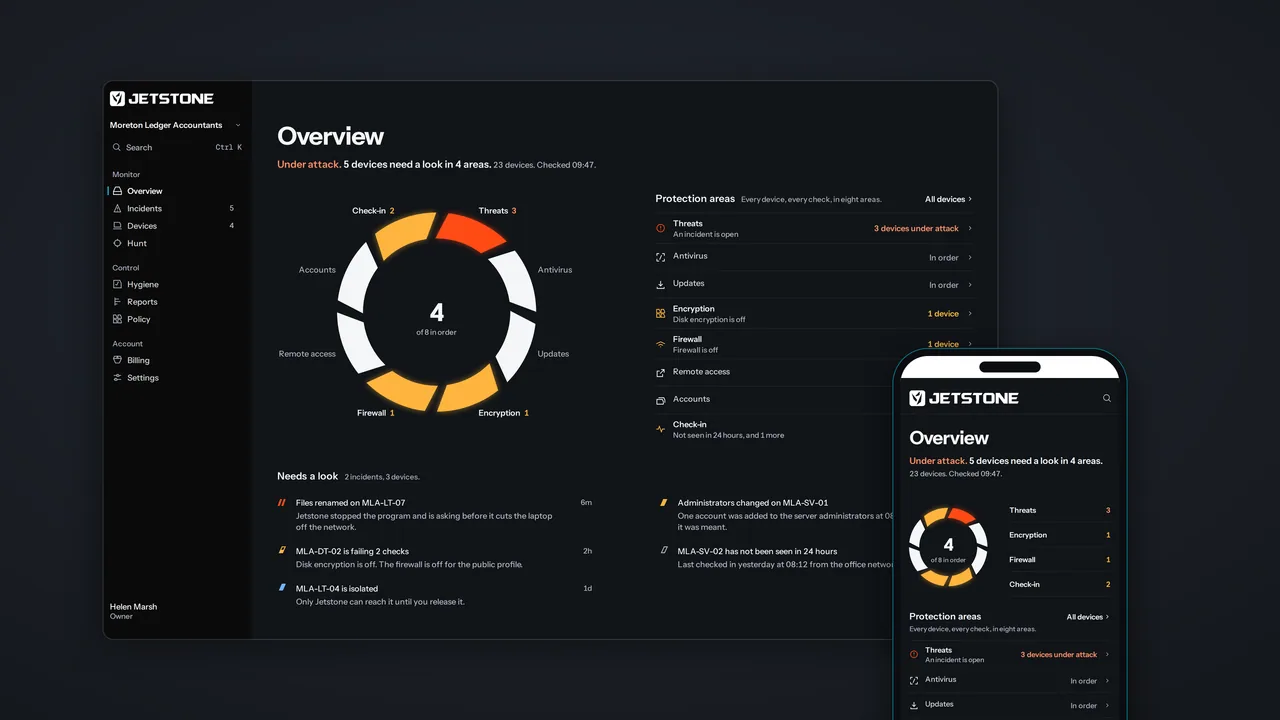
Staff, investors and the board work from one portal built around the firm’s licence.
The board signs resolutions and minutes in the portal under e-signature.

Health
Specialists run notes, letters, orders and billing from one app.
Every clinical record, recording and generated document stays in Australia.
Product screens shown with sample data.
From the newsroom
It depends on your brief. The price moves with the platforms in scope, how much the system has to integrate with, whether it serves one tenant or many, and the obligations the data brings. Name those in your brief and we reply with the questions needed to scope it.
Australia-wide. Delivery, access and reporting run the same way wherever you are based. Discovery workshops and design reviews can also run in person at our head office, as part of custom software development in Brisbane.
Yes, where the engagement calls for it. Our own clinical app ships a release every week after launch, and the client portals we run take shipped changes under ongoing engagements. A defined build with a delivery date is scoped that way from the start.
Microsoft Azure in Australian regions, with each client's data kept apart in the database itself and credentials held outside the code. iOS and Android apps from the same codebase where the product needs them.
It is designed in from the first session: threat modelling, least-privilege architecture, secrets kept out of code, and security review gates through delivery. Our cybersecurity practice then tests the finished system against the OWASP and ASD methodologies, and verifies every finding by hand before reporting it.
Yes, for law firms and financial services licensees among others. We design access rules, the audit trail and retention into the data model around the obligations your firm carries.
Yes. We run milestone-driven programs towards Essential Eight, SMB1001, ISO 27001, and Privacy Act readiness, and build the evidence trail an assessor expects as controls land.
Web applications, client portals, native iOS and Android apps, internal operations and compliance platforms, integrations, and speech, document and workflow automation. Design, a brand system, hosting in Australian Azure regions and security testing come from the same firm.
The delivery date is set by the platforms in scope, the systems the build connects to and the obligations the data carries. A defined build has its delivery date agreed in the brief before work starts. Under an ongoing engagement, a standing team ships on a regular cadence.
It runs in six stages. The scope, deliverables and price are agreed in writing first, and design starts from the threat model and the data model. Tests run on every change, scans run before each release, and each version ships through a reviewed pipeline into Australian Azure regions. After launch we host, patch and monitor it.
A defined build is quoted against your brief before any work starts, with the scope, deliverables and price in writing. An ongoing engagement runs as a standing team on an agreed cadence, reviewed as the work evolves.
Yes. We are a Xero Developer Partner and build on the Xero Accounting API, from quote-to-cash to bank-feed and transaction sync. Systems we run also sign staff in with Microsoft Entra ID and sync documents to SharePoint. Name the systems in your brief and the scope covers each connection.
Yes. We review the codebase, the accounts and the backend it depends on, then bring it under our release pipeline, with a rebuild where that costs less than repair. The Den, the Fox Valuations platform, is a system we took over and rebuilt.
Buy for standard needs. Build where the process is your differentiator, generic tools force double-handling, or audit obligations reach the architecture. We apply the same custom software vs off-the-shelf criteria to our own builds.
Yes. Queensland councils buy under Local Buy arrangement LB308 and NSW agencies through the NSW Government ICT Services Scheme (SCM0020). Black Shard is an approved supplier on the Tasmanian Government Technology Services List (TSL) for Application Development Services, Operational Technical Services and Cyber Security. Buy through the arrangement you already use.
Yes. We deliver Australia-wide. Scoping, design reviews and releases run by video at the same cadence wherever you are based, and we come on site where the build needs it.
Yes. We build speech-to-text and OCR pipelines and automation across intake, outreach and reporting, each with an audit trail and guardrails around the automated action. Before release, an AI feature also needs isolation between customers and a test that has tried to break it.
Email info@blackshard.com.au or open a brief. A rough one is enough to start scoping.