

Legal
GRM LAW
The firm runs intake, conflicts, trust oversight and AML/CTF from one portal.
We also run the firm’s Microsoft 365 tenant.

Secure development
Engineers who ship production software read your code, hand you a fix for every finding and re-review once the fixes land.
At a glance
Overview
A secure code review, also called a security code review or a source code security audit, finds the flaws in your code an attacker could use. A reviewer reads and confirms every finding, so your engineers fix real exposure.
We read the authentication flow, the authorisation checks on routes that touch data, the query layer, secrets handling, the dependency tree and the deployment configuration. Each finding comes with its severity, impact, reproduction steps and fix, and a re-review of the fixes is included.
Black Shard is an Australian software engineering and cybersecurity firm. Code review is delivered remotely against the repositories in scope, with read access and nothing further.
We read the source in scope for the flaws that cause incidents: injection, broken authentication and session handling, authorisation gaps, secrets in code or configuration, and vulnerable or abandoned dependencies.
Tooling tells us where to look. A finding is reported once a reviewer has read and confirmed it, and issues with no practical exploit path are left out.
Before launch, while a finding is still ordinary engineering work with no change window, migration risk or disclosure decision attached.
After an incident, to establish where else the same class of flaw exists and what the attacker had the opportunity to reach.
During due diligence, when acquiring, investing in or selling a software business. The review reports what ships with the codebase: secrets in the commit history, abandoned dependencies, and an authorisation model held together by convention.
Software teams commission a review before shipping a web application, API or mobile app that holds customer data, and when taking on a codebase another vendor or contractor built. Buyers and investors commission one during due diligence.
SaaS vendors commission one when a customer security questionnaire or a security schedule in a customer contract asks for independent testing. Teams preparing for ISO 27001 certification use the report as evidence for the secure development controls.
Static analysis, dependency scanning and secret scanning read a codebase quickly and flag patterns. A reviewer reads what a scanner misses: whether a route checks the right permission, whether a tenant boundary holds, and whether an attacker can reach a flagged line.
Review inside the delivery pipeline keeps the same checks running on every change. Shifting security left puts the fast checks in the pipeline and the reviewer on the changes that touch authentication, authorisation and tenancy.
We read your codebase layer by layer, because a flaw in one layer rarely turns up when the whole system is scanned at once.
Authentication and session handling: credential storage, token generation and expiry, password reset flows, and whether a session issued before a privilege change still carries the old privilege afterwards.
Authorisation and tenant isolation: whether every data-touching route enforces an authorisation check, and in a multi-tenant system, whether the tenant boundary sits in the query layer or only in application logic a request can route around.
Input handling and injection: how untrusted input reaches a query, a shell command, a template engine or a deserializer, and whether parameterisation and escaping are applied consistently, or only where a reviewer happened to look first.
Secrets and configuration: credentials committed to source, environment files checked into a repository, scaffold defaults left unchanged, and whether a secret rotates or has sat static since it was issued.
Dependency and supply-chain risk: the dependency tree read for known vulnerabilities and unmaintained packages, and whether a build resolves a pinned version or whatever is latest at build time.
Logging and error handling: whether an error response leaks a stack trace or an internal path to the caller, and whether a failed authorisation check or a privilege change reaches a log anyone reads.
Infrastructure as code: the Terraform, Bicep or equivalent provisioning the environment, read for the same class of issue as the application itself: a network rule opened wider than needed, a storage account left publicly readable, a role assignment broader than its job.
We review the stacks we ship: web applications and APIs, native iOS and Android apps, and Azure infrastructure and deployment pipelines, across the languages those stacks are built in.
The written scope names each repository and service, so a review can take one service, one feature or the whole platform. Mobile and front-end code is read for API keys shipped in the app, and each API for its authorisation model.
We need read access to the repositories in scope and nothing further. We do not need production credentials, write access or your deployment pipeline.
The reviewer first models what your system does: its roles, its trust boundaries and where privileged data or a privileged action sits. Every finding carries the file and the line, and its severity reflects what an attacker could do with it in your codebase. Once your fixes land, a follow-up pass confirms each one closes its issue without opening another.
Scoping starts with a free 30-minute call about the repositories, services and languages involved. You then get the scope, quote and timeframe in writing, and the review starts once read access is in place. The reviewer walks your team through the report.
The re-review runs once your team has merged the fixes, against the findings in the original report.
Review can start before code exists. A design-stage engagement delivers a threat model of the system or feature, an attack-surface and trust-boundary analysis, and specific design changes: a tenancy model enforced in the database, an integration holding only the privilege its job requires, a queue that authenticates its producers.
We use the same process on our own products: threat modelling before implementation, least-privilege architecture and security review gates through delivery.
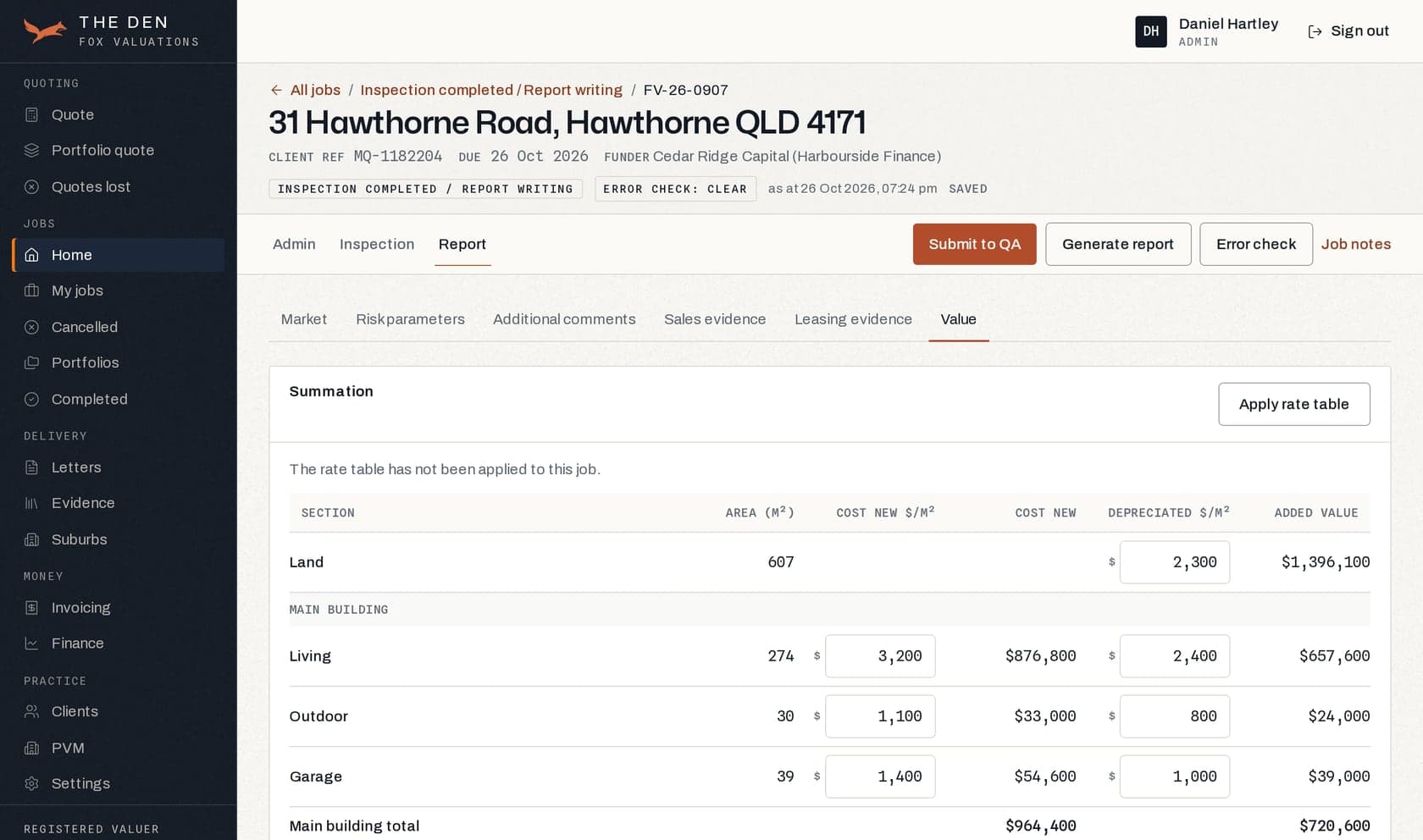
Every finding follows one structure, so the engineer who owns the file can fix it without a meeting.
A penetration test attacks the running system and reports what is reachable and exploitable within the engagement window. A code review reads the source and finds each flaw where it starts, including code behind feature flags, paths a black-box test does not reach, and the deployment pipeline.
If a finding needs proof against a live system, we scope that separately as penetration testing. We deliver both, each to a fixed scope priced before the work starts.
Authorisation and business-logic flaws are found by reading the code with knowledge of what the software is for.
The reviewers who read your code are the engineers who ship and run production software, so they know what each flaw looks like once it is live and what the fix costs to land.
Black Shard works against OWASP and ASD guidance and holds SMB1001:2026 Gold, issued by CyberCert. During an engagement we take read access to the repositories in scope and nothing more.
A code review before a web application penetration test finds the flaws visible in source, so once they are fixed the test window goes to what only a running system shows. API penetration testing and mobile app penetration testing attack the deployed build while the review reads the code behind it.
For an AI feature, AI penetration testing tests the running application for prompt injection, and the code review reads the tool permissions and data access behind it.
None of the three names secure code review as a standalone requirement, and a review does not replace any of them. Each still touches ground a code review covers, so the evidence from a review feeds directly into a gap analysis for any of the three.
Black Shard runs its own environment at Essential Eight Maturity Level 3, assessed September 2026.
The Essential Eight's patch applications strategy calls for vulnerability scanning against the applications an organisation runs, with vendor patches applied inside set windows once a vulnerability is assessed as critical. A code review reads the dependency tree directly: a package with a known vulnerability, or one with no maintainer left to publish a patch, is a finding before a runtime scanner would otherwise catch it. Its restrict administrative privileges strategy governs how privileged accounts are provisioned and separated; applied to a codebase, the same discipline covers the credential a service account holds in configuration and whether an integration runs with only the privilege one operation needs.
An Essential Eight assessment scores both strategies against your target maturity level.
SMB1001 Gold does not list secure code review among its twenty-seven controls either, but its patching control and its discipline around vendors and third parties both rest on knowing what is in a codebase and whether it is current, which is what a dependency and supply-chain review produces as evidence. Black Shard holds SMB1001:2026 Gold, issued by CyberCert. Valid 16 Jun 2026 to 17 Jun 2027.
ISO 27001 Annex A carries a secure development control: an organisation sets rules for building software securely and has to show those rules held in the code that shipped. A code review is direct evidence of that. The 2022 edition numbers the controls 8.25 (secure development life cycle), 8.28 (secure coding) and 8.29 (security testing in development and acceptance).
Our CISO holds the Exemplar Global ISO/IEC 27001:2022 Lead Auditor credential. This is a personal credential.
ASD's Information security manual expects software to be tested for vulnerabilities before its initial release, before any later release and periodically (ISM-0402). It expects code reviews to confirm that software components meet Secure by Design principles and secure programming practices (ISM-2060), and peer reviews of all critical and security-related components (ISM-2061).
Black Shard works against ASD guidance, and a review reads each area of the code against its ISM control: authentication, authorisation, input handling, secrets, dependencies and logging.
Each fix in the report carries its OWASP reference where one applies. The OWASP Top 10 names the most critical security risks to web applications, and the OWASP Application Security Verification Standard lists requirements a reviewer can verify in code, grouped by area and by assurance level.
PCI DSS version 4 has bespoke and custom software reviewed before release to production or to customers, to identify and correct potential coding vulnerabilities (requirement 6.2.3). A manual review is done by someone other than the author who knows code review techniques and secure coding practices (requirement 6.2.3.1).
CPS 234 requires an APRA-regulated entity to test the effectiveness of its information security controls through a systematic testing program, run by appropriately skilled and functionally independent specialists. An independent code review is one of those tests for an entity that builds its own software.
APP 11 of the Privacy Act requires an APP entity to take reasonable steps to protect the personal information it holds. For software that holds personal information, a review of the code that stores and serves it is one of those steps, beside Privacy Act uplift across the organisation.
Every review is scoped and quoted individually. The cost depends on the size and shape of your codebase, the services and repositories in scope, the languages and frameworks you use, and whether design-stage threat modelling is included.
You get the quote with a defined scope and timeframe before any work starts.
You can take a standalone review with a re-review of the fixes included, or have us embedded so review runs continuously across a build.
Your engineers fix the findings, and every finding ships with the steps to apply its fix. We also design, build and operate production software, so our software engineering practice can engineer and ship the fix for a finding we reported.
An embedded engagement runs security review across the build, with threat modelling at design stage and secure software development practice through delivery. Under a vCISO engagement, a code review is scoped and delivered from the security roadmap as a separate piece of work.
Legal
The firm runs intake, conflicts, trust oversight and AML/CTF from one portal.
We also run the firm’s Microsoft 365 tenant.

Financial services
Staff, investors and the board work from one portal built around the firm’s licence.
The board signs resolutions and minutes in the portal under e-signature.

Health
Specialists run notes, letters, orders and billing from one app.
Every clinical record, recording and generated document stays in Australia.
Product screens shown with sample data.
From the newsroom
 High severity
 Critical severity
It depends on the size of your codebase, the services in scope, the languages and frameworks in use, and whether design-stage threat modelling is included. A single service is a shorter exercise than a whole platform. The timeframe is set at scoping and is in writing before work starts.
A penetration test attacks the running system and reports what is reachable and exploitable within the engagement window. A code review reads the source and finds each flaw where it starts, including code behind a feature flag and paths a black-box test never reaches. If a finding needs proof against a live system, we scope a penetration test separately.
No. A code review runs against the source, its configuration and its dependency manifests. We ask for read access to the repositories in scope and nothing beyond that. If a finding warrants proof against a running system, that is scoped separately as penetration testing.
The ones we ship: web applications and APIs, native iOS and Android, and Azure infrastructure and deployment pipelines, across the languages those stacks are built in. If your stack sits outside that, name it in the brief and we will tell you whether we are the right reviewers.
No. Tools point us at code worth reading, and a reviewer confirms each finding before it is reported. We do not report a finding without a fix.
Yes. We judge code by the same criteria however it was written: authentication, authorisation and tenant isolation, injection, secrets and dependency risk. No finding is reported until a reviewer has read and confirmed it. AI-assisted development usually means more code changes, so keep the review in place.
We re-review them as part of the engagement. Once your team has applied the fixes, we read them and confirm each one closes its issue without introducing another.
It is a document your engineers can work from directly. Each finding is ranked by severity and written with its impact, reproduction steps and a fix with the steps to apply it.
Yes. Code review is delivered remotely against your repository, and the findings carry reproduction steps your engineers can act on wherever they sit.
A security code review is a manual read of application source, configuration and dependencies for flaws an attacker could use: broken authentication, missing authorisation checks, injection, exposed secrets and vulnerable dependencies. Each confirmed finding is reported with its file and line, its impact and the fix.
Every review is scoped and quoted individually. The cost depends on the size and shape of your codebase, the services and repositories in scope, the languages and frameworks in use, and whether design-stage threat modelling is included. You get the quote with a defined scope and timeframe before any work starts.
Yes. Secure code review, security code review, source code review and source code security audit are names for the same engagement. A reviewer reads your source, configuration and dependencies for flaws an attacker could use, and reports each confirmed finding with its fix.
A peer review checks that one change is correct and maintainable. A secure code review reads the system as an attacker would: its roles, trust boundaries, authentication, authorisation, input handling, secrets and dependencies, across every repository in scope. The reviewer is independent of the team that wrote the code.
Ask who reads the code, whether a reviewer confirms each finding, whether every finding comes with a fix, and whether a re-review is included. At Black Shard, engineers who ship production software read your code, a reviewer confirms every finding, each finding carries its fix, and the re-review is part of the engagement.
Yes. We judge code by the same criteria whoever wrote it, and the report states what ships with the codebase: secrets in the commit history, abandoned dependencies and how authorisation is enforced. Our software engineering practice can then engineer and ship the fixes.
We work with read access to the repositories in scope and nothing further. Data is encrypted in transit and at rest. A defined incident path covers our Privacy Act notification obligations.
ASD's Information security manual expects software to be tested for vulnerabilities before its initial release, before any later release and periodically. We recommend a review before launch and again when authentication, authorisation or tenancy changes. An embedded engagement runs review continuously across a build.
Yes. ISO 27001:2022 Annex A covers secure coding and security testing in development. PCI DSS has custom software reviewed for coding vulnerabilities before release. CPS 234 requires APRA-regulated entities to test their information security controls. A review report with findings, fixes and re-review status is evidence for each.
Yes. We design, build and operate production software as well as reviewing it, so we can engineer and ship the fix for a finding we reported. Third-party assurance on a platform Black Shard built is run by a separate reviewer with no part in the build.
Yes. The written scope names each repository and service, so a review can take one service, one feature or the whole platform. A single service is a shorter exercise than a whole platform, and a design-stage engagement can cover one feature before its code exists.